Creating New Foundations: A Trans-Witch Philosophy of Golf, Bodies, and Belonging
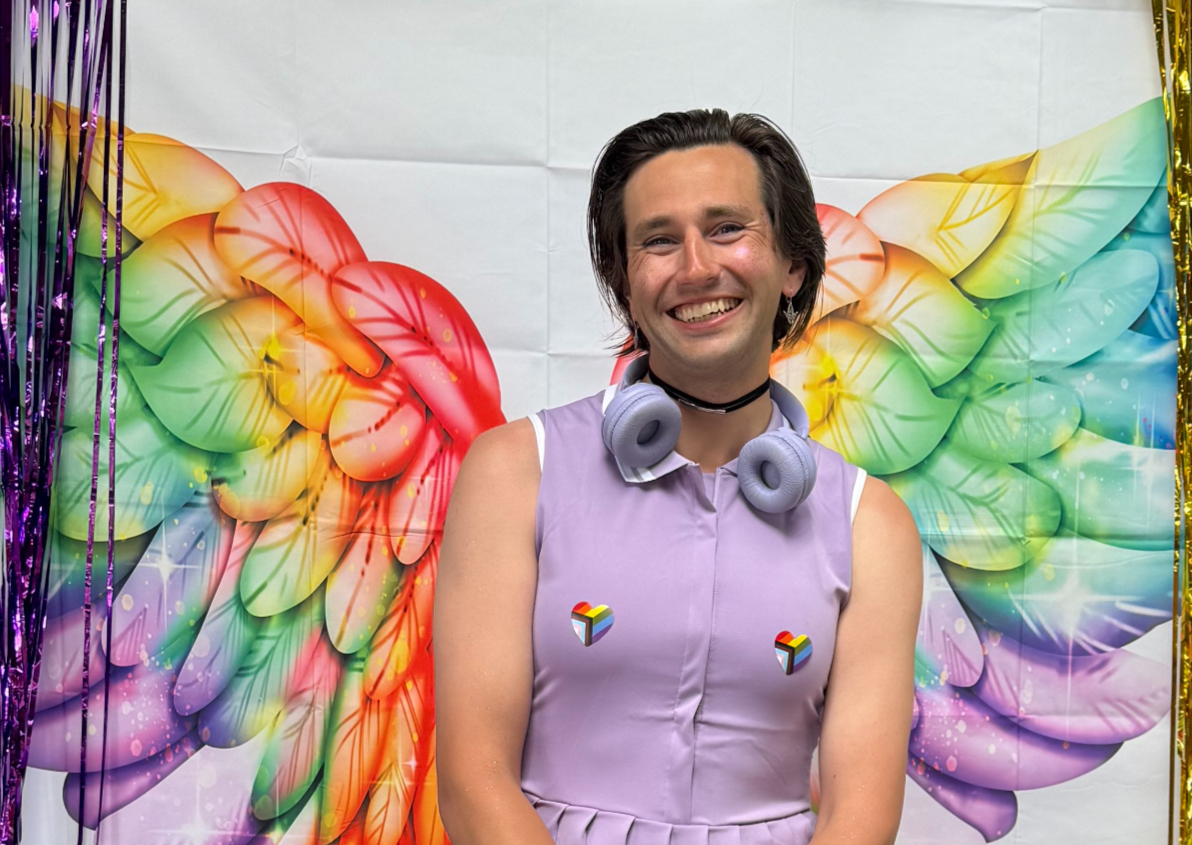
Challenging the traditions we inherit, reclaiming our relationship with movement, and creating new possibilities for the magic of the game.
There is something wonderfully peculiar about golf. We gather on carefully maintained landscapes to send a small ball toward a distant hole, using instruments that demand an extraordinary relationship between intention, movement, and chance. We study the ground beneath our feet, the direction of the wind, the resistance of the grass, and the possibilities that emerge when our bodies interact with the world around us.
Yet, for all the attention we give to understanding the physical landscape of golf, we often overlook the social landscape in which the game exists. Who was this space designed for? Whose bodies are assumed to belong here? Who is granted authority to teach, compete, and lead? And what happens when someone arrives whose existence challenges the expectations built into those traditions?
At Stix & Stone Golf, these questions are not separate from our philosophy of instruction. They are part of the foundation upon which we are building our business. We believe that the game of golf has extraordinary potential to inspire connection, personal growth, and community transformation. But realizing that potential requires more than inviting new players into existing spaces.
Sometimes, it requires questioning the foundations themselves.
The Game We Inherited and the Game We Imagine
Golf has long been associated with traditions of exclusivity. Across its history, access to the game has been shaped by wealth, race, gender, and social status. Even as golf becomes more accessible, elements of these histories persist in the cultural expectations surrounding participation. The ideal golfer is often imagined through a remarkably narrow lens: masculine, heterosexual, financially comfortable, physically capable, and familiar with the unspoken rules of belonging.
These assumptions are not always expressed through explicit exclusion. Sometimes they appear in the language of instruction, the expectations of appearance, the casual conversations in a clubhouse, or the authority granted to certain people over others. Heteronormativity encourages us to assume that everyone occupies familiar categories of gender, relationships, and identity. Patriarchal traditions can reinforce expectations about whose knowledge carries weight, whose strength is celebrated, and whose presence is treated as an exception. For people who exist outside these expectations, participation can become an exercise in constant self-awareness.
We begin wondering whether we are being perceived as golfers or as disruptions to someone else's understanding of the game. This is not to suggest that every golf course or golfer perpetuates these conditions. Many people have worked for generations to expand access and challenge exclusion. We are grateful to be part of that ongoing effort. But inclusion cannot simply mean allowing someone to enter a space while expecting them to leave essential parts of themselves behind.
We do not want to become acceptable exceptions to the traditions that exclude us. We want to participate in creating new traditions.
For us, this means approaching golf through anti-racism, anti-sexism, queer affirmation, disability awareness, and cultural and spiritual pluralism. It means understanding that no single body, identity, or way of moving should become the standard against which everyone else is measured. It means recognizing that the conditions for belonging are created through our actions, not merely through our intentions.
Why We Are a Trans-Witch Golf Business
The decision to make Stix & Stone Golf a Trans-Witch business is both personal and philosophical. As a transgender woman and, well, a witch, I have spent considerable time examining the expectations that shaped my understanding of identity, authority, and belonging. There is an unusual relationship between learning to play golf and learning to inhabit a body that others have tried to define for you.
Both experiences can involve confronting inherited beliefs about what is correct, natural, powerful, or acceptable. Both can demand that we distinguish between the conditions of the world around us and the possibilities that exist within ourselves. And both invite a profound question:
What becomes possible when we stop organizing our movements around the fear of being wrong?
My experience of witchcraft is rooted in personal autonomy, intentional practice, connection with the natural world, and an appreciation for the continual processes of becoming.
The witch, as I understand her, is not simply a figure of folklore or rebellion. She represents an invitation to question inherited authority, cultivate relationships with the world around us, and participate intentionally in the creation of meaning.
Witchcraft provides a symbolic language for exploring transformation.
Its elemental traditions, seasonal cycles, and reflective practices invite us to observe the relationships between what is visible, what is felt, and what remains possible. Likewise, queerness offers more than an identity outside conventional expectations. It can become a way of questioning the necessity of those expectations altogether.
Being Trans-Witch forward means allowing these perspectives to shape our approach to golf openly, rather than concealing them to appear more traditionally professional. It does not mean that our students must be transgender, queer, spiritual, or interested in witchcraft. We welcome people across identities, beliefs, experiences, and abilities. Our spiritual language is an invitation to reflection, never a requirement for participation.
We believe our professionalism is demonstrated through the quality of our instruction, the integrity of our relationships, and the care with which we engage our communities—not through conformity to a narrow image of who a golf professional should be.
We are not abandoning the fundamentals of golf.
We are asking what those fundamentals can teach us when they are no longer confined to one understanding of the human body.
The Elements: Reconnecting With Our Queer Bodies
The Core Elements of Golf emerged from a desire to connect the physical fundamentals of the game with a more relational understanding of movement.
Rather than treating the body as an instrument that must obey a prescribed collection of positions, we approach it as a living participant in the learning process.
For queer and transgender players, this relationship can carry particular significance. Many of us have experienced the pressure to monitor, conceal, or modify how our bodies appear and move. The simple experience of occupying space can become entangled with concerns about judgment, exposure, or safety. Golf offers an opportunity to explore a different relationship.
Not because a golf swing can resolve the social conditions that produce these experiences, but because intentional movement can provide moments of agency, curiosity, and connection. Our elemental framework gives us a language for approaching those moments.
Earth — Establishing Our Foundation
Earth is the ground beneath our feet, the structure of our stance, and the physical relationship between our bodies and the club.
It invites us to notice the sensations of balance, pressure, stability, and support.
For those of us who have learned to make ourselves smaller, Earth asks what it might feel like to occupy our full foundation.
To establish our footing without apology.
To recognize that stability does not require rigidity and that every body deserves the opportunity to discover its own relationship with the ground.
Our roots do not have to resemble anyone else's to provide support.
Water — Learning to Move Without Force
Water represents rhythm, adaptability, tempo, and the transfer of energy through movement.
A golf swing cannot be reduced to a series of frozen positions. It is a continuous interaction between forces, intentions, and responses.
Water reminds us that movement is not always improved by applying more control.
Sometimes, we must release unnecessary tension to discover what our bodies are capable of doing.
For queer bodies accustomed to constant self-monitoring, this invitation can be particularly meaningful.
We can explore movement for the experience of moving, rather than for the approval of an imagined observer.
We learn to adapt without believing adaptation requires surrendering ourselves.
Air — Creating Space for Perspective
Air governs awareness, perception, intention, and the narratives we construct around our experiences.
Before a golfer addresses the ball, countless thoughts may already be competing for attention.
What if I miss? What if someone is watching? What if I embarrass myself?
These thoughts can shape our relationship with movement long before the club begins its journey.
Through breath, observation, and intentional attention, Air invites us to distinguish between what is happening and the stories we are telling ourselves about what might happen.
It does not ask us to ignore genuine threats or dismiss the realities of discrimination.
Instead, it helps us recognize where choice remains available.
We can assess the target, establish our intention, and decide where our attention belongs.
We can learn that not every thought requires our obedience.
Fire — Reclaiming Power and Agency
Fire represents action, energy, courage, and transformation.
It is the spark of intention that becomes movement.
For many players, power is associated with physical strength, speed, and the ability to control the outcome of a shot.
Yet effective power in golf frequently emerges through coordination, timing, and the intelligent use of the body's available resources.
More force does not always create more distance.
Likewise, reclaiming personal power does not always require confronting every obstacle with greater intensity.
Sometimes Fire asks us to establish a boundary. Sometimes it asks us to speak. Sometimes it asks us to protect the conditions that allow our energy to remain available for the things we love.
For our queer community, Fire is an invitation to experience power without having to prove our worthiness of possessing it.
Spirit — Integrating the Experience
Spirit is not another mechanical position in the golf swing.
It represents the relationship between the elements and the meaning we make from our experiences.
Earth offers support. Water provides movement. Air creates perspective. Fire inspires action.
Spirit invites us to consider how these relationships inform our sense of self, our connections with others, and the communities we participate in creating.
It asks whether our approach to the game reflects the values we wish to carry beyond the course. And it reminds us that a golfer is never merely a collection of physical movements. We are beings in relationship with our bodies, our histories, our environments, and one another.
There is magic in that relationship—not necessarily something supernatural, but the extraordinary possibility of discovering new ways to inhabit an experience we thought we already understood.
Moving Through Resistance Without Becoming Smaller
Resistance is a familiar experience in golf. The ground resists our feet. The club encounters the ball. The wind influences its flight. The grass changes its path. Without these interactions, the game as we understand it would not exist.
But resistance is not always something to overcome through greater force. Sometimes it provides information. Sometimes it establishes a boundary. Sometimes it reveals that our approach must change.
Our philosophy recognizes an important distinction between the resistance involved in learning a physical skill and the resistance created by social exclusion. We should never ask marginalized players to become more resilient simply so that harmful environments can remain unchanged. Instead, we must work on both sides of the relationship.
We can support players in developing confidence, autonomy, and a more compassionate connection with their bodies while also challenging the conditions that make participation unnecessarily difficult. This is why our instructional practices emphasize individualized movement, collaborative learning, respectful communication, and the freedom to explore without shame.
A student should not have to earn dignity through competence. A beginner deserves the same respect as an accomplished player. A transgender golfer should not have to explain their existence to receive instruction. A person with a disability should not be measured against an inaccessible standard of movement. The work of creating new foundations asks us to change the conditions for learning, not simply demand that every learner adapt to the conditions we inherited.
From Personal Transformation to Community Investment
If Stix & Stone Golf is committed to creating new foundations, that commitment must eventually extend beyond our instructional relationships. We must also consider how the financial resources generated through our business can support the communities that make our work meaningful.
Golf is an industry through which money moves constantly.
We purchase equipment, pay for lessons, maintain facilities, sponsor events, and invest in experiences. These transactions sustain a network of businesses, professionals, and institutions.
But what if we became more intentional about where some of those resources traveled?
What if participating in golf could also contribute to the stability, safety, and flourishing of queer communities throughout Tacoma? We envision developing a community reinvestment model in which designated portions of event proceeds, future business contributions, and voluntary fundraising support local LGBTQIA+ organizations.
This could begin with events such as Par 3s for Pride, where participation in a joyful community golf experience creates opportunities to support organizations serving people beyond the golf course.
A portion of an event's net proceeds could be directed toward charitable partners after direct operating expenses are covered. As the business develops sufficient financial stability, we could also establish a recurring contribution from selected instructional offerings or a dedicated annual giving budget. Clients and supporters might be invited to contribute directly to participating organizations, while sponsors could help increase the impact through matching gifts.
The funds could then flow toward organizations whose work addresses distinct but interconnected needs throughout the South Sound.
The Rainbow Center supports LGBTQIA2S+ people throughout Tacoma and Pierce County through education, advocacy, community resources, and celebration.
Oasis Youth Center provides affirming programming, resources, and opportunities for connection for LGBTQ+ young people in Pierce County.
The Diversity Alliance of the Puget Sound brings a trans-led perspective to mutual aid, advocacy, and community-based safety.
(These organizations represent potential beneficiaries of a future giving initiative, not partnerships or financial commitments we have already established, and we encourage any reader to support these organizations regardless of partnership status.)
As this vision develops, we believe transparency should remain central. Any formal fundraising campaign should clearly communicate which organizations benefit, how contributions are calculated, what expenses are deducted, and the amount ultimately distributed. We want to cultivate a model of reciprocity rather than charity as an exercise in self-congratulation.
Our community has already contributed to the possibility of Stix & Stone Golf. Through relationships, encouragement, collaboration, and participation, others have helped create the conditions for our business to exist. Community reinvestment offers a way to recognize that support by allowing some of the resources generated through our work to circulate back into the places from which it emerged. Not every contribution needs to be financial, either.
Our time, professional skills, access to instruction, and ability to organize gatherings can become valuable resources for community development. We envision a future in which queer youth can discover golf without fearing judgment, transgender adults can experience movement in affirming environments, and community organizations can build meaningful relationships with recreational spaces that once felt inaccessible. This is not simply about bringing more people into golf. It is about considering what golf can contribute to the communities around it.
Creating New Foundations in Golf
A foundation is not a fortress.
We do not build it to separate ourselves from the world, but to create the conditions through which new possibilities can take shape. Stix & Stone Golf exists because we believe that the traditions of a game are not more important than the people who participate in it. We believe that fundamentals can be taught without enforcing conformity, that strength can exist without domination, and that professionalism can coexist with queerness, spirituality, imagination, and joy.
We believe a golf course can become a place where people practice more than their swings.
They can practice taking up space.
They can practice responding to uncertainty without abandoning themselves.
They can explore the difference between power and force, between belonging and conformity, between the expectations they inherited and the possibilities they wish to create.
And through intentional relationships and community investment, we believe the resources generated by this experience can extend far beyond the boundaries of the course.
We are a Trans-Witch golf business because we refuse to believe that authenticity and professional excellence must exist in opposition. We are a queer-affirming golf business because belonging should not depend upon a person's willingness to conceal who they are. And we are an elemental golf business because the natural world continually reminds us that transformation emerges through relationships—not through the domination of one force over another.
There will always be resistance.
There will always be uncertainty.
There will always be moments when the path ahead asks us to reconsider what we thought we knew.
But there will also be ground beneath our feet, air in our lungs, movement available to our bodies, and the fire of intention waiting to become action.
Perhaps that is where the magic of the game has been hiding all along.
Not in the perfect swing or the perfect social transition.
Not in the traditions we preserve without question.
But in the possibility that, together, we can create something more expansive than what we inherited.
Stix & Stone Golf — Creating New Foundations in Golf.
For the magic of the game.
Inclusion Is Always in Play.
— Coach Xzraphina | Founder, Stix & Stone Golf LLC


