Out Here on the Grass: A Queer Reflection on Golf, Belonging, and Building My Own Space
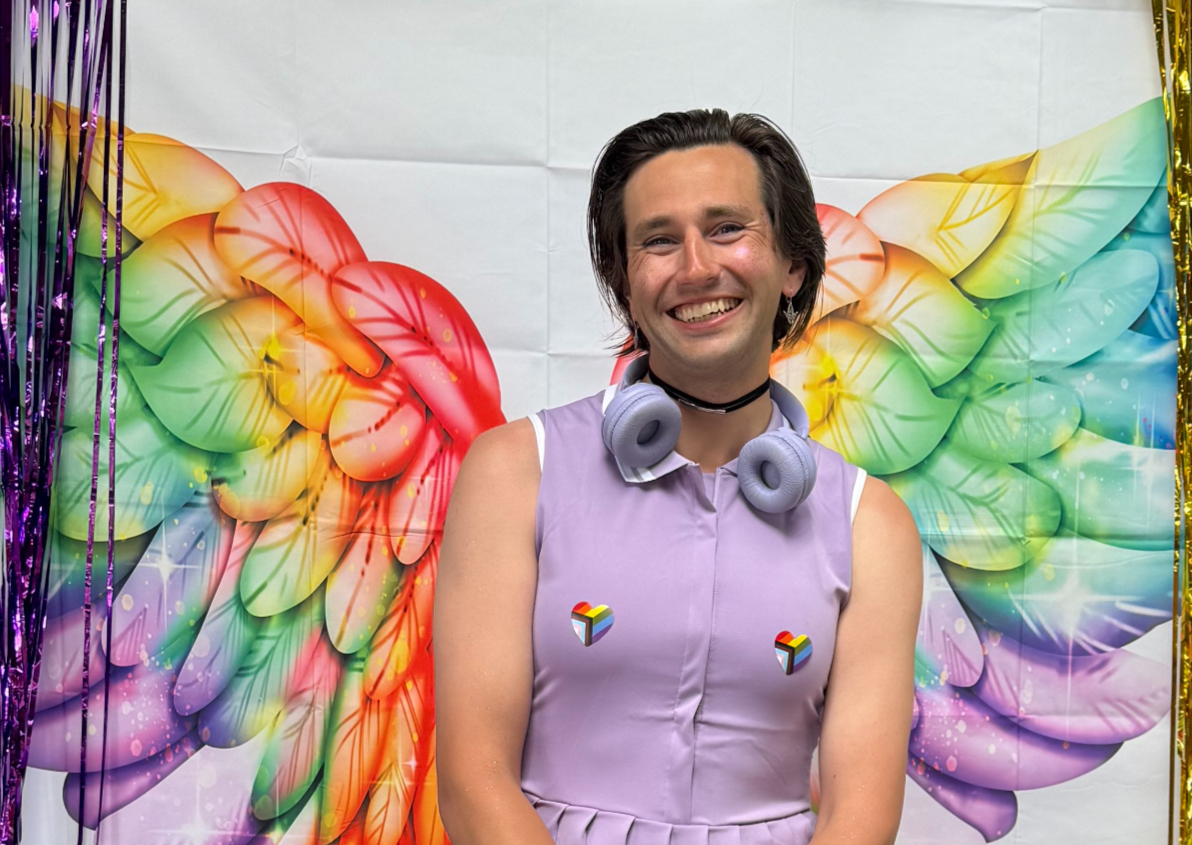
There is a moment before the swing.
The club settles behind the ball. My feet find the ground. My eyes move from target to ball and back again. Somewhere between the noise of everything that brought me here and the uncertainty of what happens next, there is a breath.
A year ago, I wrote about that moment as a place where I could remember who I was. At the time, I was still learning how much energy it took to exist openly inside a game whose traditions had not always imagined someone like me standing at the center of them. I wrote about queerness, resistance, visibility, and the decision to stop waiting for someone else to make space for me.
I stopped waiting for someone to carve out a lane for me. I built my own.
A year later, I think I understand that sentence differently. Building your own space does not necessarily mean leaving the old world behind. Sometimes it means standing directly inside it, on the same grass, beneath the same rules, surrounded by the same traditions, and changing what becomes possible there simply by refusing to disappear.
And somewhere along the way, I became more visible to myself, too.
Golf has a peculiar way of making change feel almost imperceptible. You practice the same movement hundreds of times, walk familiar holes, and hit from familiar lies. For a while, nothing seems different. Then one day, you notice that your balance has changed. Your finish is wider, your breath is quieter, and you are no longer trying to force the movement you once thought you needed.
Over this past year, I have experienced something similar in my own life. The person who wrote the earlier version of this reflection was already queer, already questioning the structures around them, and already building something new. But there were still parts of myself waiting to be named.
Today, I move through this game as Xzraphina (Xzra), a golfer, a coach, a business owner, and a trans person.
None of these things appeared suddenly. They emerged through attention, reflection, and the gradual willingness to recognize what had been present all along. Like a golf swing, identity sometimes reveals itself through small movements before we fully understand the shape they are creating. A different posture, a different voice, a willingness to occupy a little more space, and then another.
For much of my life, belonging felt like a negotiation. I learned to measure my presence against the expectations of others, wondering whether I was useful enough, professional enough, good enough, or quiet enough to earn my place. I wondered whether I could bring my queerness into a space without making anyone uncomfortable, whether changing my name would become an inconvenience, or whether the way I dressed, spoke, and taught would be received as an expression of professionalism or a departure from it.
There is an exhausting mathematics to conditional belonging. You continually calculate how much of yourself a room might tolerate, adjusting your presence according to expectations that are rarely spoken aloud.
Golf provides plenty of opportunities for that calculation. It remains a sport deeply shaped by histories of exclusion involving race, wealth, gender, sexuality, disability, and access. Some of those barriers are explicit, while others survive through culture, expectation, and the quiet power of deciding who looks like they naturally belong. Tradition can create continuity and shared understanding, but it can also become a means of protecting familiar identities from unfamiliar possibilities.
Over time, I have become less interested in looking like I belong and more interested in simply being here.
Those are different things.
I do not need to reproduce golf's traditional image to participate meaningfully in its future, and neither do the people I coach.
When Stix & Stone Golf began, I imagined it primarily as a different kind of instructional space. I wanted to create an environment where fundamentals could coexist with curiosity, where learning involved the body rather than simply correcting it, and where golfers could develop their abilities without feeling pressured to erase themselves in the process.
That vision remains, but the work has grown beyond what I first understood it to be.
This year, I watched people gather for Par 3s for Pride and transform nine holes of a municipal golf course into something joyful, queer, ridiculous, competitive, welcoming, and alive. I watched beginners step onto the course uncertain whether they knew enough to be there. I watched juniors experiment, families play, veterans learn, and queer golfers find one another. I watched people laugh at bad shots instead of apologizing for them, discovering that perhaps the game did not have to be approached with so much apprehension.
Somewhere inside those experiences, Stix & Stone stopped feeling like a space I was building for people and became something we were creating together.
That distinction has changed how I understand my role as a coach and business owner. Community is not something I can simply provide, and belonging cannot be handed down like permission. These things emerge through participation, reciprocity, and the willingness to make room for one another. They develop through introductions, lessons, shared experiences, repaired divots, and small invitations that communicate something much larger than the words themselves.
You can play with us.
What once felt like an act of individual resistance has gradually become an exercise in collective creation. I am learning that building an inclusive space requires more than opening a door. It means remaining curious about who has not yet entered, what conditions might prevent them from doing so, and how the environment itself might need to change.
It also means recognizing that visibility, while powerful, is not without its complications.
Last year, I wrote that visibility was not vanity but a lifeline. I still believe that, although I have come to understand its weight more intimately.
Being visibly trans in golf right now means knowing that some people may encounter my existence as a political statement before they encounter me as a person. It means walking into tournaments, facilities, professional spaces, and conversations aware that gender may enter the room before my golf game does.
There have been moments when the name on a tee sheet did not match the person standing on the tee, when the administrative realities of transition moved more slowly than the human experience, and when I found myself wondering how much explanation I owed anyone.
There is vulnerability in navigating those moments. There is also an unfamiliar kind of freedom in discovering that I can move through them without abandoning myself.
Visibility has given me something I did not entirely anticipate: evidence.
Evidence that I can compete while navigating discomfort, coach without making myself smaller, and participate meaningfully in professional spaces without surrendering my identity. Evidence that people will show up when invited into a different vision of golf and that authenticity and professionalism were never opposites to begin with.
Perhaps most importantly, I am gathering evidence that fear does not always mean stop. Sometimes fear simply tells us that we have arrived somewhere new, somewhere our previous experiences have not yet taught us how to feel secure.
As golfers, we are often encouraged to choose the safest line. Find the fairway, avoid the trouble, play away from the hazard, and eliminate unnecessary risk. There is considerable wisdom in course management, but I have also begun wondering what happens when risk avoidance becomes a philosophy of living.
For years, I practiced a similar kind of emotional course management. I learned to anticipate discomfort, avoid confrontation, and position myself where I believed I would be least likely to disturb the expectations of others. It was a strategy that sometimes protected me, but it also limited the possibilities I could imagine for myself.
Some of the most important changes in my life began when I stopped treating myself like the hazard.
Queerness taught me that. Transition continues to teach me that. Coaching reminds me of it whenever a student discovers that a movement they once feared is precisely the movement that allows them to grow.
There are places worth entering even when the lie is uncertain. There are shots worth attempting because the alternative is continually playing away from yourself. Sometimes the path forward is not found by making ourselves narrower.
Sometimes power requires width.
That realization has also begun to reshape the language and philosophy of Stix & Stone Golf. This year, I have been returning to a new expression of our purpose: Creating New Foundations in Golf.
There is a contradiction hidden inside those words that I find increasingly meaningful. Foundations suggest stability, permanence, and something established beneath our feet. Creating, by contrast, suggests movement, uncertainty, experimentation, and the possibility that what exists today may not be sufficient for what we hope to become tomorrow.
Perhaps healthy foundations require both.
Something stable enough to stand upon and alive enough to change.
For much of my life, I imagined belonging as the eventual discovery of a place where I would finally fit. I believed that if I worked hard enough, proved myself capable enough, and found the right environment, the uncertainty would eventually disappear. I would arrive somewhere complete, with a secure position inside a structure that had finally made room for me.
Now I wonder whether belonging is less about finding a finished structure and more about learning to build relationships sturdy enough to keep changing.
Relationships with people, with place, with the body, with the game, and with ourselves.
The elemental principles that guide my coaching have become increasingly meaningful through this understanding. Earth reminds me that stability is not rigidity, but a relationship with the ground that makes movement possible. Water invites adaptation and responsiveness. Air teaches awareness, perspective, and direction. Fire carries the energy of transformation, the willingness to act upon intention. And Aether, that less tangible quality of presence and connection, reminds me that none of these elements exists entirely apart from the others.
A foundation is not valuable simply because it remains unchanged. Its purpose is to support what grows from it.
It should not become a fortress protecting us from everything unfamiliar.
I think about that often when considering the future of golf, especially the spaces we are creating for people whose relationships with the game have historically been complicated by exclusion. It is not enough to invite new people into unchanged systems and celebrate their presence as evidence of progress. We must also be willing to consider what their participation reveals about the systems themselves.
The game is capable of holding so much more than the narrow image often associated with it. Golf can be contemplative and competitive, traditional and experimental, disciplined and playful. It can be a space for physical development, emotional awareness, friendship, grief, laughter, and transformation.
It can be serious without becoming severe.
It can honor its history without requiring us to repeat every part of it.
And it can welcome new forms of belonging without losing the qualities that make the game meaningful.
I still love that quiet moment before the swing, but I no longer think it is where I remember who I am. I think I bring more of myself to the ball now.
The remembering has been happening everywhere else.
It has happened in conversations, in community gatherings, in tournaments and lessons, in Pride celebrations and professional meetings, in difficult rooms and changing rooms, in changing names and changing expectations. It has happened in moments of uncertainty when the future of the business was unclear and in quieter moments when I recognized how much had already been built.
Most of all, it has happened through the small decisions to remain present rather than disappear.
And then, after all of that, I arrive over the golf ball.
My feet find the ground. My attention returns to the target. My breath moves through my body, and I prepare to make a swing without any guarantee of what happens next.
There is something profoundly familiar about that uncertainty now.
It exists in golf, in transition, in relationships, and in the process of creating something that has never existed in quite the same way before. We do not receive certainty before we begin. We create conditions, establish our footing, pay attention, and make a movement toward something we cannot completely control.
Sometimes the result surprises us. Sometimes we discover that our intentions and outcomes do not align. Sometimes we find ourselves in unfamiliar territory, learning how to recover, adapt, and begin again.
None of those experiences means the movement was wasted.
A year ago, I ended this reflection by writing that we were just getting started. I think we still are, although the meaning of those words has changed.
I am no longer waiting to discover whether there is room for me in golf. I am learning what it means to inhabit that room fully, to participate in its transformation, and to invite others into the process without pretending I have all the answers.
There is still uncertainty ahead. There will be difficult conversations, uncomfortable transitions, unexpected obstacles, and moments when the ground beneath us feels less stable than we would like.
But there will also be people to meet, lessons to share, new foundations to establish, and possibilities we cannot yet imagine.
I am already out here.
So are you.
There is plenty of grass, and I am increasingly curious about how we might grow on it together.
And, as always, repair your divots and fix your ball marks.
Inclusion is always in play.
✨ Xzraphina Grace✨
Stix & Stone Golf


